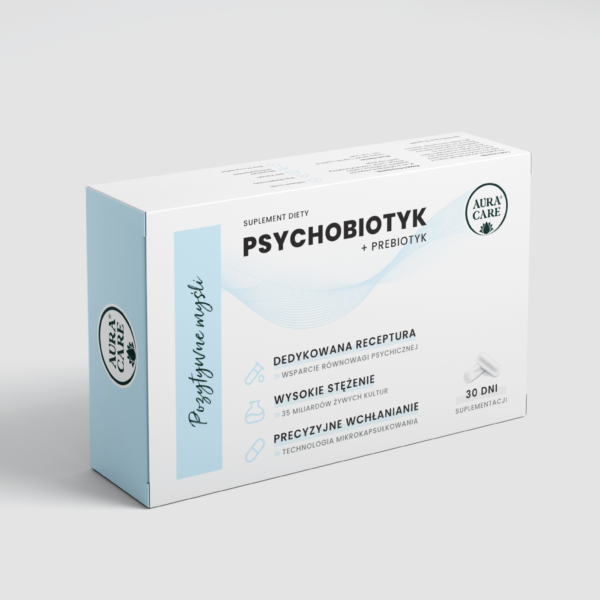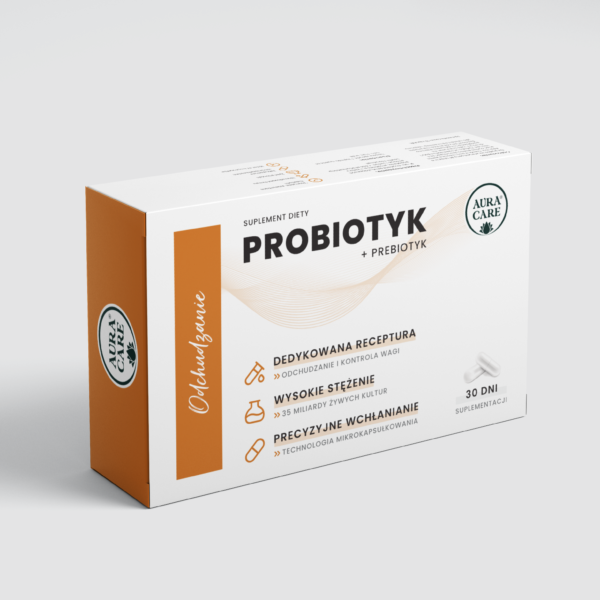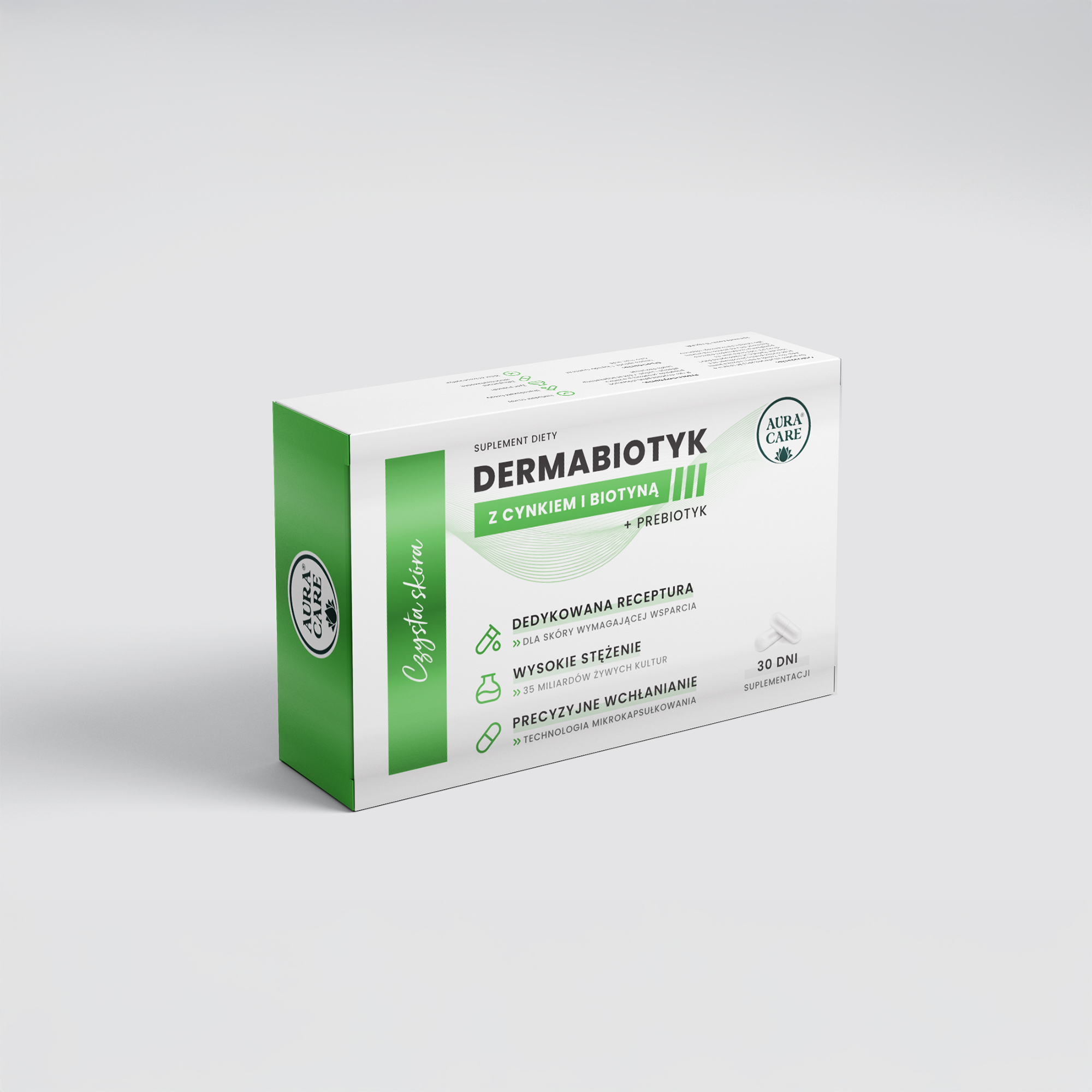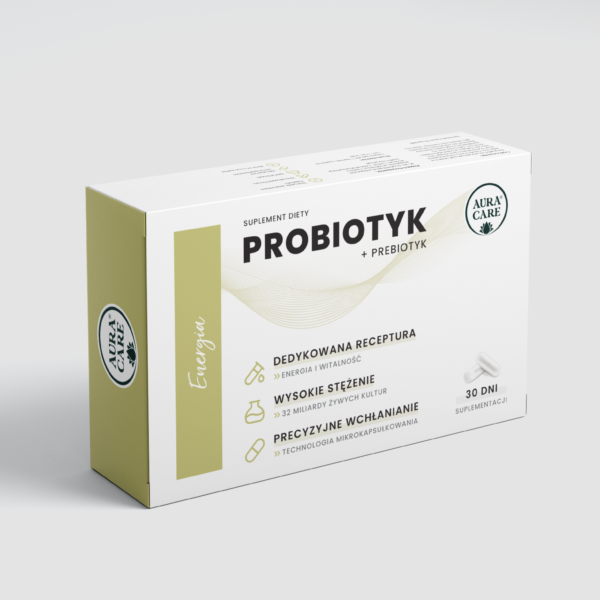





Probiotyk na odporność – Probiotyki Aura Care
W dzisiejszych czasach, gdy wiele osób polega wyłącznie na witaminie C jako głównym środku wspomagającym naturalną odporność, badania pokazują, że prawdziwa siła układu immunologicznego kryje się w jelitach. Zdrowe jelita są kluczem do silnego systemu odpornościowego.
Probiotyki na odporność zostały stworzone z myślą o osobach, które pragną wzmocnić swoją odporność i wspierać regenerację po antybiotykoterapii. Dzięki unikalnej formule, produkt ten pomaga utrzymać równowagę mikroflory jelitowej, co jest fundamentem skutecznej odpowiedzi immunologicznej i ogólnego zdrowia.
Probiotyki Aura Care – Stworzone na prośbę klientów
Cieszymy się, że możemy odpowiedzieć na prośby naszych stałych klientów o stworzenie probiotyków ukierunkowanych na specyficzne potrzeby. Otrzymaliśmy liczne maile i ankiety od zadowolonych użytkowników naszych adaptogenów, którzy chcieli, abyśmy poszerzyli naszą ofertę o probiotyki.
Dzięki Waszym sugestiom i wsparciu, stworzyliśmy probiotyki, które są nie tylko poparte badaniami, ale również mogą być synergicznie stosowane z adaptogenami Aura Care. Nasza nowa linia probiotyków została opracowana z myślą o tych, którzy pragną kompleksowego wsparcia zdrowia jelit, energii, witalności oraz zdrowego stylu życia.
Aura Care - Probiotyk na odporność - Korzyści ze stosowania
* Zgodne z Rozporządzeniem Komisji (UE) nr 432/2012.
W nawiasach znajdują się odnośniki do dowodów naukowych, wymienionych na dole strony.
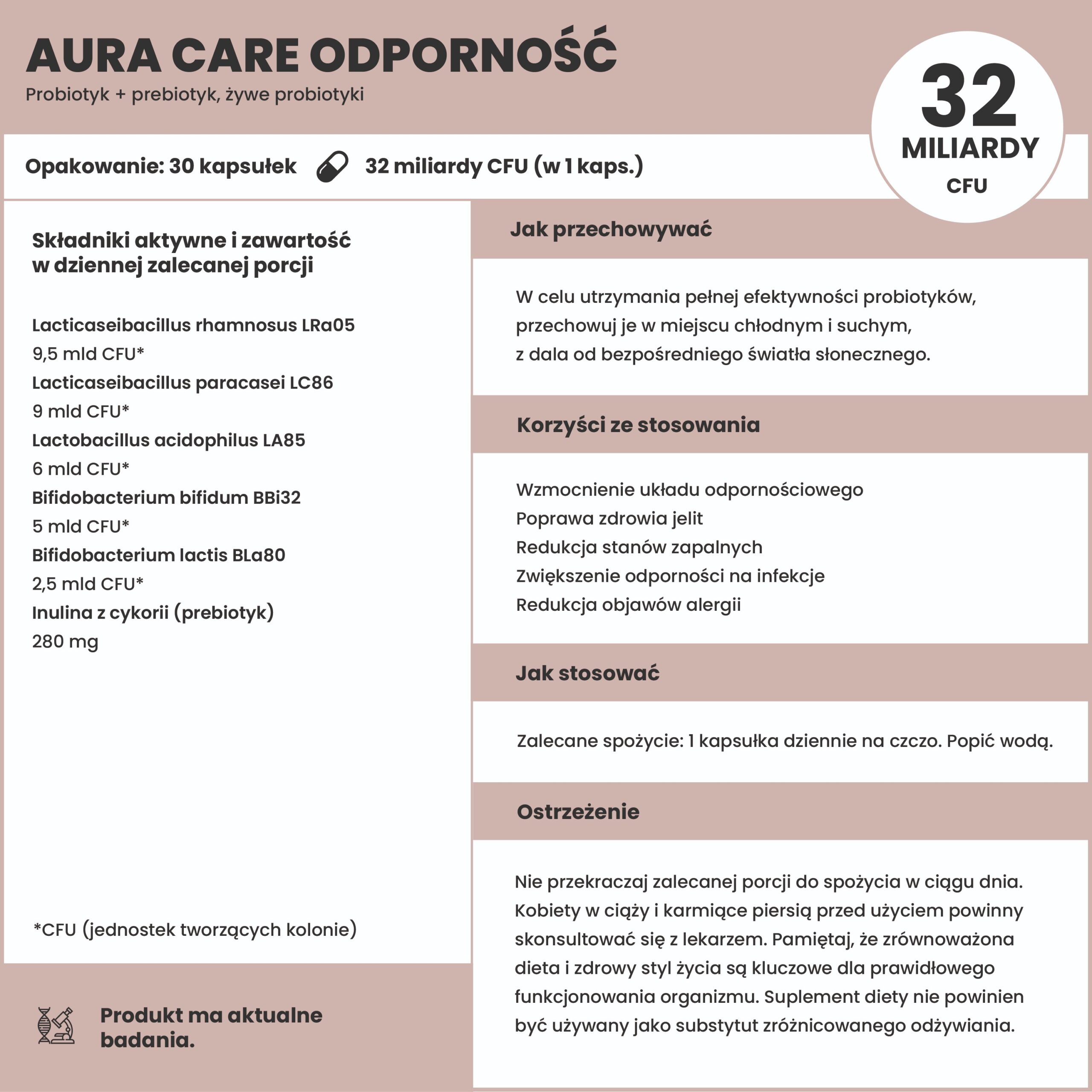
- Wzmocnienie układu odpornościowego:
Lactobacillus rhamnosus GG wspiera zdrowie jelit, co przekłada się na silniejszy układ odpornościowy. Badania pokazują, że ten szczep może zwiększać odpowiedź immunologiczną organizmu, chroniąc przed infekcjami i wspomagając regenerację po antybiotykach. (1,2) - Poprawa zdrowia jelit:
Bifidobacterium lactis wspomaga zdrowie układu trawiennego, co jest kluczowe dla utrzymania silnego układu odpornościowego. Regularne stosowanie B. lactis może pomagać w redukcji stanów zapalnych jelit i wspierać ogólne zdrowie trawienne. (3,4) - Redukcja stanów zapalnych:
Lactobacillus paracasei wspiera równowagę mikroflory jelitowej, co pomaga w zmniejszeniu stanów zapalnych w organizmie. Probiotyki pomagają w przywróceniu równowagi mikroflory, co zmniejsza stan zapalny i poprawia ogólną kondycję organizmu. (5,6) - Zwiększenie odporności na infekcje:
Lactobacillus acidophilus może przyczyniać się do zwiększenia odporności organizmu na infekcje poprzez wspieranie zdrowej mikroflory jelitowej. Badania pokazują, że L. acidophilus może wpływać na produkcję przeciwciał, co wspomaga naturalne mechanizmy obronne organizmu. (7,8) - Redukcja objawów alergii:
Lactobacillus rhamnosus GG wykazuje zdolność do łagodzenia objawów alergii poprzez regulację szlaku sygnalizacji receptorów T-komórkowych. Badania wykazały, że LGG może skutecznie zmniejszać objawy alergii pokarmowych i atopowego zapalenia skóry. (9,10)
Dlaczego odżywione jelita wpływają na siłę układu odpornościowego?
* Zgodne z Rozporządzeniem Komisji (UE) nr 432/2012.
W nawiasach znajdują się odnośniki do dowodów naukowych, wymienionych na dole strony.
Zdrowe jelita odgrywają kluczową rolę w funkcjonowaniu układu odpornościowego. Oto kilka powodów, dlaczego odżywione jelita wzmacniają siłę układu immunologicznego:
- Bariera ochronna:
Jelita stanowią fizyczną barierę, która chroni organizm przed patogenami. Zdrowa mikroflora jelitowa wspomaga integralność bariery jelitowej, co zapobiega przenikaniu szkodliwych mikroorganizmów i toksyn do krwiobiegu. (1,2) - Produkcja przeciwciał:
Probiotyki stymulują produkcję przeciwciał, zwłaszcza immunoglobuliny A (IgA), które odgrywają kluczową rolę w neutralizacji patogenów. (3,4) - Regulacja odpowiedzi immunologicznej:
Mikroflora jelitowa wpływa na rozwój i funkcjonowanie układu odpornościowego, modulując odpowiedzi immunologiczne. Zdrowe jelita pomagają regulować równowagę między odpowiedzią prozapalną a przeciwzapalną. (5,6) - Wpływ na komórki odpornościowe:
Zdrowa mikroflora jelitowa wspomaga produkcję i aktywność komórek odpornościowych, takich jak makrofagi, limfocyty T i komórki dendrytyczne, które są kluczowe w walce z patogenami. (9,10)
Gwarancja stabilności aktywnych szczepów i efektywne wchłanianie
Zabezpieczenie zaawansowaną technologią mikrokapsułkowania żywych kultur gwarantuje ich maksymalną efektywność i stabilność. Dzięki temu procesowi, aktywne szczepy probiotyczne są chronione przed działaniem kwasów żołądkowych i innych czynników zewnętrznych, co zapewnia ich dotarcie do jelit w niezmienionej formie. To innowacyjne podejście pozwala na pełne wykorzystanie korzyści zdrowotnych naszych probiotyków, zapewniając optymalne wsparcie dla Twojego organizmu.
Przebadane szczepy – skład
| Składniki aktywne | Zawartość w dziennej zalecanej porcji |
|---|---|
| Lacticaseibacillus rhamnosus LRa05 | 9,5 mld CFU* |
| Lacticaseibacillus paracasei LC86 | 9 mld CFU* |
| Lactobacillus acidophilus LA85 | 6 mld CFU* |
| Bifidobacterium bifidum BBi32 | 5 mld CFU* |
| Bifidobacterium lactis BLa80 | 2,5 mld CFU* |
| Inulina z cykorii (prebiotyk) | 280 mg |
*CFU (jednostek tworzących kolonie)
Sposób użycia
Zalecane spożycie: 1 kapsułka dziennie na czczo. Popić wodą.
Warunki przechowywania
W celu utrzymania pełnej efektywności probiotyków, przechowuj je w miejscu chłodnym i suchym, z dala od bezpośredniego światła słonecznego.
Ostrzeżenia
Nie przekraczaj zalecanej porcji do spożycia w ciągu dnia. Kobiety w ciąży i karmiące piersią przed użyciem powinny skonsultować się z lekarzem. Pamiętaj, że zrównoważona dieta i zdrowy styl życia są kluczowe dla prawidłowego funkcjonowania organizmu. Suplement diety nie powinien być używany jako substytut zróżnicowanego odżywiania.
| Informacje szczegółowe | |
|---|---|
| Pojemność | 30 kapsułek (wystarczy na miesiąc stosowania) |
| Zawartość kolonii probiotycznych | 32 miliardy CFU (w 1 kaps.) |
| Kategoria | Odchudzanie i kontrola wagi |
| Cechy produktu |
|
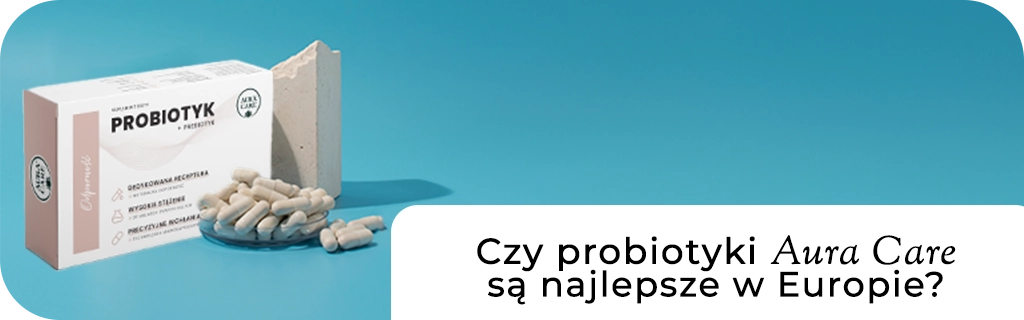
Setki przeczytanych książek i opracowań naukowych, tysiące godzin zgłębiania wiedzy o mikrobiomie oraz niezliczone próby przy dobieraniu odpowiednich szczepów bakterii i tworzeniu skutecznych formuł nie mogą być jedynymi wyznacznikami jakości produktów. Prawdziwym wyznacznikiem jest zaufanie do skuteczności probiotyków, a to można osiągnąć poprzez staranność i dbałość o każdy szczegół procesu produkcji. Zostań naszym klientem i przekonaj się sam o różnicy!

W probiotykach Aura Care zdecydowaliśmy się na suplementy diety w formie kapsułek z odpowiednio dobranymi szczepami bakterii. Na bazie wielu badań zauważyliśmy dużą skuteczność takich preparatów i wygodę przyjmowania, a dodatkowo sama forma kapsułki pozwala na zwiększenie przyswajania wielu cennych bakterii probiotycznych. Probiotyki w formie kapsułek = wysoka skuteczność
Indywidualne Zestawy probiotyków Aura Care
Oferujemy zestawy 2 oraz 3 dowolnych probiotków Aura Care.
Kupując zestaw możesz oszczędzić nawet 25%.

Źródła do wpływu jelit na proces odchudzania:
- Turnbaugh, P. J. et al. (2006). „An obesity-associated gut microbiome with increased capacity for energy harvest.” Nature, 444(7122), 1027-1031. ↩
- Ridaura, V. K. et al. (2013). „Gut microbiota from twins discordant for obesity modulate metabolism in mice.” Science, 341(6150), 1241214. ↩
- Cani, P. D. et al. (2009). „Metabolic endotoxemia initiates obesity and insulin resistance.” Diabetes, 56(7), 1761-1772. ↩
- Tilg, H., & Moschen, A. R. (2006). „Adipocytokines: mediators linking adipose tissue, inflammation and immunity.” Nature Reviews Immunology, 6(10), 772-783. ↩
- Hamad, E. M. et al. (2012). „Yogurt containing Lactobacillus acidophilus La5 and Bifidobacterium lactis Bb12 supplemented with almond skins modulates the immune response in mice.” Journal of Food Science, 77(3), H115-H120. ↩
- Ley, R. E. et al. (2006). „Microbial ecology: Human gut microbes associated with obesity.” Nature, 444(7122), 1022-1023. ↩
- Bäckhed, F. et al. (2004). „The gut microbiota as an environmental factor that regulates fat storage.” Proceedings of the National Academy of Sciences, 101(44), 15718-15723. ↩
- Hooper, L. V. et al. (2012). „Molecular analysis of commensal host-microbial relationships in the intestine.” Science, 336(6086), 1268-1273. ↩
- Turnbaugh, P. J. et al. (2009). „A core gut microbiome in obese and lean twins.” Nature, 457(7228), 480-484. ↩
- Kalliomäki, M. et al. (2008). „Early differences in fecal microbiota composition in children may predict overweight.” The American Journal of Clinical Nutrition, 87(3), 534-538. ↩
Źródła do korzyści ze stosowania:
- Osterberg, K. L. et al. (2015). „Probiotic Lactobacillus fermentum supplementation reduces markers of oxidative stress in endurance athletes: A randomized, double-blind, placebo-controlled trial.” Nutrition Research, 35(5), 393-401
- Sanchez, M. et al. (2014). „Effect of Lactobacillus rhamnosus CGMCC1.3724 on weight loss and maintenance in obese men and women.” British Journal of Nutrition, 111(8), 1507-1519.
- Kadooka, Y. et al. (2010). „Effect of Lactobacillus gasseri SBT2055 in fermented milk on abdominal adiposity in adults in a randomised controlled trial.” British Journal of Nutrition, 104(4), 633-642.
- Moroti, C. et al. (2012). „Effect of the consumption of a new symbiotic shake on glycemia and cholesterol levels in elderly people with type 2 diabetes mellitus.” Lipids in Health and Disease, 11, 29.
- Lee, K. et al. (2015). „The effects of Bifidobacterium lactis supplementation on inflammatory markers and fecal microbiota in patients with irritable bowel syndrome.” Journal of Gastroenterology and Hepatology, 30(5), 947-951.
- Jones, M. L. et al. (2012). „Effect of Lactobacillus acidophilus on serum cholesterol in hypercholesterolemic humans.” Journal of Dairy Science, 95(1), 87-95.
- Kadooka, Y. et al. (2010). „Regulation of abdominal adiposity by probiotics (Lactobacillus gasseri SBT2055) in adults with obese tendencies in a randomized double-blind, placebo-controlled trial.” European Journal of Clinical Nutrition, 64(6), 636-643.